
How to Sell Your Moroccan Property from Abroad: A Complete Guide for Expats and MRE Sellers
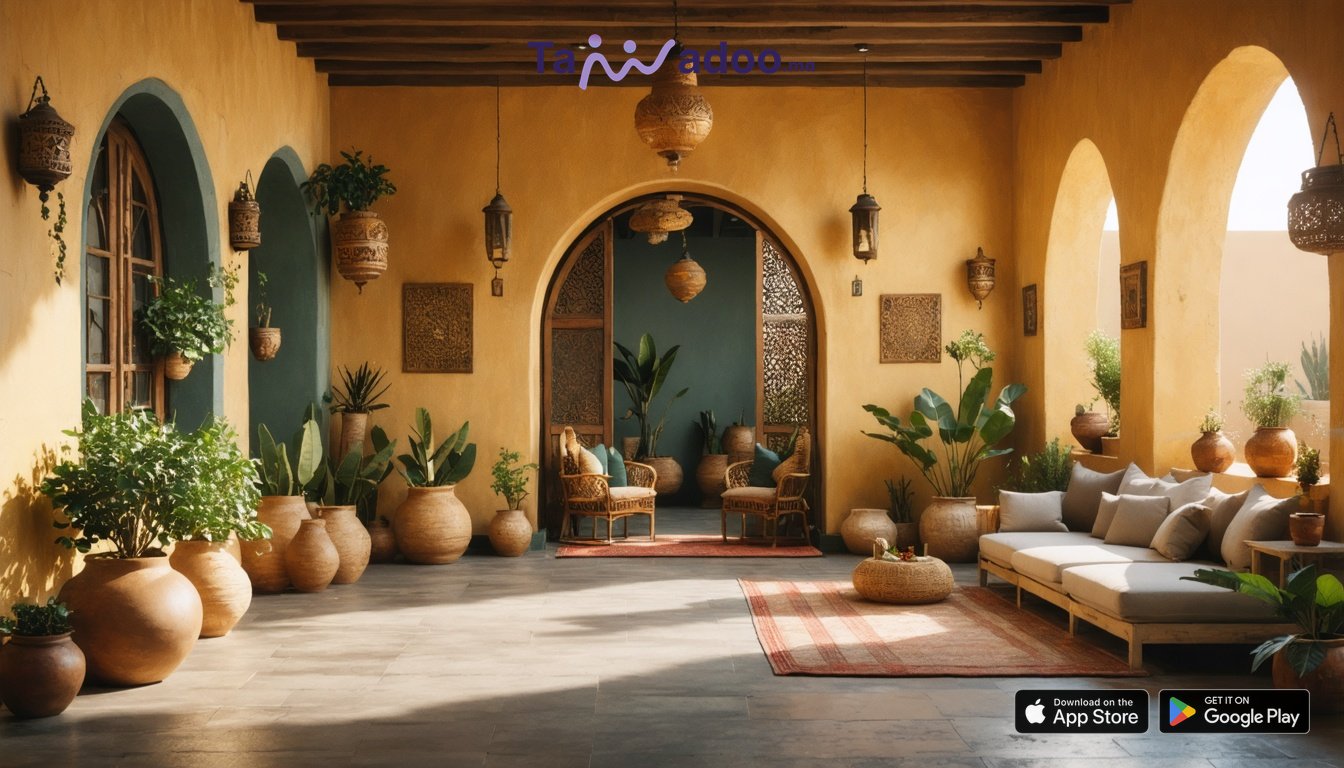
Selling Moroccan Property from Abroad: It Is Possible — Here Is How
You own an apartment in Casablanca, a house in Tangier, or a plot of land near Agadir. You live in France, Spain, Belgium, or Canada. And you want to sell. The good news: selling Moroccan real estate remotely is entirely achievable in 2026 — if you know the right process, prepare the right documents, and use the right tools to reach genuine buyers.
This guide walks you through every step, from verifying your ownership documents to publishing a listing that converts international interest into real offers — without needing to book a flight every time someone wants to visit the property.
---Step 1 — Verify Your Ownership Documents Before You List
Before you do anything else, confirm that your title deed is clean, current, and free of encumbrances. Moroccan real estate transactions are governed by the land registry system administered by the Agence Nationale de la Conservation Foncière, du Cadastre et de la Cartographie (ANCFCC). You can verify the status of your property's title (titre foncier) through their official portal at ancfcc.gov.ma.
The core documents you will need to complete a sale are:
- Titre foncier (land title) — the definitive proof of ownership registered with the conservation foncière
- Certificat de propriété — a recent extract confirming your ownership and any registered charges
- Certificat de non-inscription (CNI) — confirms no mortgage or legal charge is registered against the property
- Taxe d'habitation and taxe de services communaux receipts — proof that local taxes are paid up to date
- Your national identity card or passport — a notarised and apostilled copy if you are abroad
If your property is not yet registered (melkia or non-titré), the sale process is more complex and you will almost certainly need a notary (adoul or notaire) on the ground in Morocco. Factor this in early.
The Power of Attorney Option
If you cannot travel to Morocco to sign the final sale deed in person, you can grant a procuration (power of attorney) to a trusted person — a family member, a lawyer, or a notary — who will sign on your behalf. This document must be notarised in your country of residence and then apostilled (or legalised through the Moroccan consulate if your country is not part of the Hague Convention). Prepare this document early — consulate appointments can take several weeks.
---Step 2 — Price Your Property Realistically for Today's Market
One of the most common mistakes remote sellers make is pricing based on what they paid years ago, or on what a neighbour claimed their property sold for. Moroccan real estate prices vary significantly by city, neighbourhood, floor, condition, and current demand.
Here is a general framework for pricing in July 2026, based on active marketplace data:
- Casablanca (Maarif, Gauthier, Ain Diab): Apartments typically range from 12,000 to 22,000 DH per square metre depending on finish and floor
- Rabat (Agdal, Hassan, Hay Riad): Mid-range apartments in established neighbourhoods typically fall between 11,000 and 18,000 DH/m²
- Tangier (Centre, Malabata, Marchane): Strong demand from both domestic and international buyers; 9,000 to 16,000 DH/m² for well-located apartments
- Agadir and surrounding areas: Coastal and peri-urban properties vary widely — from 7,000 DH/m² for standard apartments to over 15,000 DH/m² for beachfront or resort-adjacent units
- Marrakech (Guéliz, Hivernage, Palmeraie): High international demand; 10,000 to 20,000+ DH/m² for well-presented properties
To price accurately, browse active listings in your city and neighbourhood on Tawadoo's real estate listings — filter by city and property type to see what comparable properties are listed at right now. This gives you a live market anchor, not a theoretical estimate.
Set a realistic asking price that leaves room for negotiation (typically 5–10% in Morocco's market), but do not overprice to the point where your listing sits ignored for months. A property that has been listed for a long time without movement attracts lower offers, not higher ones.
---Step 3 — Create a Listing That Works While You Sleep
Because you are not in Morocco, your listing has to do more work than a local seller's listing. Buyers will not be able to call you at any hour, meet you the next morning, or pop by for a quick look. Your listing must answer their questions before they ask them.
Photography: Quality Over Quantity
If you still have access to the property (or can arrange access through a family member or caretaker), invest in good photography. Natural light, wide-angle shots of each room, close-ups of finishes (flooring, kitchen fittings, bathroom tiles), and exterior shots including the building entrance and street context. Aim for 12–20 photos minimum for an apartment, more for a villa or land plot.
If you cannot access the property yourself, hire a local real estate photographer in the city — this typically costs between 300 and 800 DH for a full apartment shoot and is one of the highest-return investments you can make in your listing.
Video: Your Most Powerful Remote Selling Tool
This is where remote sellers can genuinely stand out. A short walkthrough video — even filmed on a smartphone — transforms buyer confidence. A buyer in Paris or Brussels who can watch a 90-second video tour of your Casablanca apartment is far more likely to make a serious enquiry than one who only sees static photos.
Tawadoo is a video-first marketplace, meaning video listings receive significantly higher visibility and engagement. Ask a trusted person on the ground — a family member, a neighbour, your building's gardien — to film a simple walkthrough: entrance, living room, kitchen, each bedroom, bathroom, terrace if there is one, and the view from the windows. Natural light, slow steady movement, no music needed. Upload it directly to your Tawadoo listing.
Buyers actively look for listings with video when they are considering a remote purchase. A video listing signals that you are a serious, transparent seller — and it dramatically reduces the number of low-quality enquiries you will receive.
Your Written Description: Be Specific and Honest
Write your listing description as if you are answering the five questions every buyer will have:
- Exactly where is it? — neighbourhood, street, proximity to landmarks, public transport, schools, souks
- What is the condition? — recently renovated, original condition, any known issues
- What is included? — furnished or unfurnished, which appliances, parking, storage, cave
- What are the charges? — syndic fees, local taxes, any outstanding charges
- What is the legal status? — titre foncier registered, melkia, en cours de titrement
Buyers who receive complete information upfront are more likely to make a serious offer. Buyers who have to ask basic questions are more likely to move on to the next listing.
---Step 4 — Publish on Tawadoo and Reach the Right Buyers
Tawadoo connects buyers and sellers across Morocco and internationally — including the large MRE (Moroccans Residing Abroad) community who are actively looking to buy property in Morocco from France, Belgium, Spain, and beyond. This is your natural audience as a remote seller: buyers who understand the remote purchase process, who are comfortable with video-based due diligence, and who are motivated to act.
To publish your property listing, visit Tawadoo's homepage, create your seller account, and select the real estate category. Choose the correct sub-category (apartment for sale, house for sale, land for sale, commercial property) and fill in all fields completely — incomplete listings rank lower in search results and receive fewer enquiries.
Once your listing is live, you can use Tawadoo Coins to Boost your listing and increase its visibility in search results and category pages. For a high-value asset like real estate, Boost is worth using — the cost is minimal relative to the transaction value, and it ensures your listing is seen by active buyers rather than sitting in the middle of the page.
Browse current apartment-for-sale listings in your city to understand how your listing compares: apartments for sale on Tawadoo.
---Step 5 — Manage Enquiries and Visits Remotely
Once your listing is live, you will start receiving messages. Here is how to manage this efficiently from abroad:
Responding to Enquiries
Reply promptly — ideally within a few hours. Buyers enquiring about property in Morocco are often comparing multiple listings simultaneously. A slow response signals low motivation to sell and gives competitors the advantage. Enable Tawadoo notifications on your phone so you are alerted immediately when a message arrives.
For serious enquiries, offer a video call (WhatsApp, FaceTime, or Google Meet) to walk through the property virtually if needed, or to answer detailed questions. This personal contact builds trust and moves buyers toward making an offer.
Organising Property Visits
You will need someone on the ground to show the property to interested buyers. Options include:
- A trusted family member with a key and clear instructions
- A local real estate agent on a co-agency basis (typically 1–2.5% commission on sale)
- Your building's gardien for initial viewings, with you available by video call during the visit
Set clear guidelines for whoever shows the property: what to highlight, what questions to redirect to you, and how to handle offers (always refer back to you in writing before agreeing to anything).
Negotiating and Accepting an Offer
All negotiations should be conducted in writing — via Tawadoo messaging, WhatsApp, or email — so there is a clear record. Once you agree on a price, the next step is the compromis de vente (preliminary sale agreement), drafted by a notary. This document commits both parties and typically involves a deposit of 10–20% of the agreed price. Your notary in Morocco handles this step and can communicate with you remotely.
---Tax and Financial Considerations for Remote Sellers
Selling Moroccan real estate as a non-resident has tax implications on both sides. In Morocco, capital gains on real estate sales are subject to Impôt sur le Revenu (IR) at a rate that depends on how long you have held the property. Properties held for more than 10 years benefit from a reduced rate; properties sold within 2 years of purchase face higher rates. Your Moroccan notary will calculate and withhold this tax at source.
In your country of residence (France, Belgium, Spain, etc.), you may also have a reporting obligation for the sale of foreign real estate assets. Check with a local tax advisor — many countries have tax treaties with Morocco that prevent double taxation, but the reporting requirement still applies. For administrative procedures related to the transaction, service-public.ma provides official guidance on property transaction procedures in Morocco.
Transferring the sale proceeds from Morocco to your country of residence requires a transfert de fonds through a Moroccan bank. Non-resident sellers (MRE status or foreign residents) are generally entitled to repatriate the full net proceeds, provided the original purchase was made through official banking channels. Your bank in Morocco handles this — keep all documentation of the original purchase and the sale deed.
---Frequently Asked Questions
Can I sell my Moroccan property without travelling to Morocco?
Yes. You can complete the entire sale remotely by granting a notarised and apostilled power of attorney to a representative in Morocco — a family member, lawyer, or notary. They sign the final sale deed on your behalf. You will need to prepare this document in advance through a notary in your country of residence and have it legalised at the Moroccan consulate or via apostille (if your country is a Hague Convention signatory). The process typically takes 3–6 weeks to arrange, so start early.
What documents do I need to sell an apartment in Morocco as a non-resident?
You need: your titre foncier (land title registered with the ANCFCC), a recent certificat de propriété, a certificat de non-inscription confirming no mortgage or charge on the property, proof of paid local taxes (taxe d'habitation, taxe de services communaux), and a notarised copy of your identity document. If you are signing via power of attorney, the procuration itself must also be notarised and apostilled. Your Moroccan notary will give you a complete checklist once they know the specifics of your property.
How do I find serious buyers for my Moroccan property from abroad?
List your property on Tawadoo with a complete description, high-quality photos, and — critically — a video walkthrough. Video listings on Tawadoo receive significantly more engagement than photo-only listings, and they are especially effective for attracting remote buyers (MRE and international) who cannot visit in person immediately. Use Tawadoo Coins to Boost your listing for increased visibility. Browse current apartment listings on Tawadoo to benchmark your listing against active competition.
How much capital gains tax will I pay when selling Moroccan real estate?
In Morocco, capital gains on real estate sales are subject to Impôt sur le Revenu (IR). The rate depends on the holding period: properties held for more than 10 years benefit from a reduced effective rate (often around 20% of the net gain after allowances), while shorter holding periods attract higher rates up to 20% flat on the gross gain for properties held under 2 years. Your Moroccan notary calculates and withholds this tax at the point of sale. You may also have a reporting obligation in your country of residence — check with a local tax advisor, as Morocco has double-taxation treaties with France, Belgium, Spain, and several other countries.
How do I transfer the sale proceeds from Morocco to France or another country?
Non-resident sellers (including MRE) are entitled to repatriate the full net proceeds of a Moroccan property sale, provided the original purchase was made through official banking channels and is documented. You initiate the transfer through your Moroccan bank using the notarised sale deed and proof of original purchase as supporting documents. The bank processes the international transfer (virement international) to your foreign account. Processing typically takes 2–4 weeks. Keep all documentation — the original purchase deed, the sale deed, and the tax clearance certificate from the notary.