
How to Buy a Used Smartphone in Morocco: The Complete 2026 Guide for Expats & International Buyers
Why Morocco Is a Great Market for Used Smartphones
Morocco's secondhand smartphone market is one of the most active in North Africa. Whether you're an expat settling into Casablanca, a tourist who needs a local SIM-ready device, or an international buyer sourcing electronics for personal use, you'll find a wide range of phones at prices that are genuinely competitive. The market spans everything from budget Android handsets under 1,000 Moroccan dirhams (DH) to flagship iPhones and Samsung Galaxy devices well above 8,000 DH.
The key to buying well here is knowing where to look, what to check, and how to protect yourself during a face-to-face transaction. This guide walks you through every step — from browsing listings on Tawadoo to handing over cash with confidence.
Understanding the Moroccan Secondhand Phone Market in July 2026
July is one of the busiest months for electronics transactions in Morocco. The summer season brings a surge of Moroccans returning from abroad, many of whom sell devices they've brought back — creating a temporary spike in higher-spec, well-maintained phones on the market. It's genuinely one of the best times of year to find a quality deal.
At the same time, demand is high. University students preparing for the September rentrée begin their search early, and expats arriving for new work postings need devices quickly. Moving fast on a good listing is important — well-priced phones with video listings often receive multiple inquiries within hours of being posted.
What Price Should You Expect to Pay?
Based on current active listings on Tawadoo, here is a realistic price breakdown by phone tier as of July 2026:
- Budget Android phones (entry-level, 2–4 years old): 800–2,500 DH. Brands like Tecno, Itel, Infinix, and older Samsung A-series models dominate this range.
- Mid-range smartphones (Samsung Galaxy A53/A54, Xiaomi Redmi Note series, Motorola G-series): 2,500–5,500 DH depending on storage configuration and condition.
- High-end Android (Samsung Galaxy S21/S22, OnePlus, Google Pixel): 5,500–9,000 DH for devices in good condition with original accessories.
- iPhones: iPhone 11 typically 4,500–6,000 DH; iPhone 13 ranges from 7,000–9,500 DH; iPhone 14 Pro models can reach 11,000–14,000 DH. Prices vary significantly based on storage size and whether the device is unlocked or carrier-locked.
For context, the Samsung Galaxy Tab S7 Plus 5G is currently listed at 7,999 DH in Casablanca-Settat on Tawadoo — giving you a useful reference point for how premium Samsung devices are priced in the current Moroccan market. Smartphone prices follow a similar premium-to-mid-range ratio.
Always compare at least three to five listings before making an offer. Prices on the same model can vary by 1,000–2,000 DH depending on the seller's urgency, the device's condition, and whether original packaging is included.
Where to Find Used Phones in Morocco
You have two main options: physical markets and online marketplaces. Both have their place, but for international buyers especially, starting online gives you a significant advantage.
Physical Markets (Marchés de Téléphones)
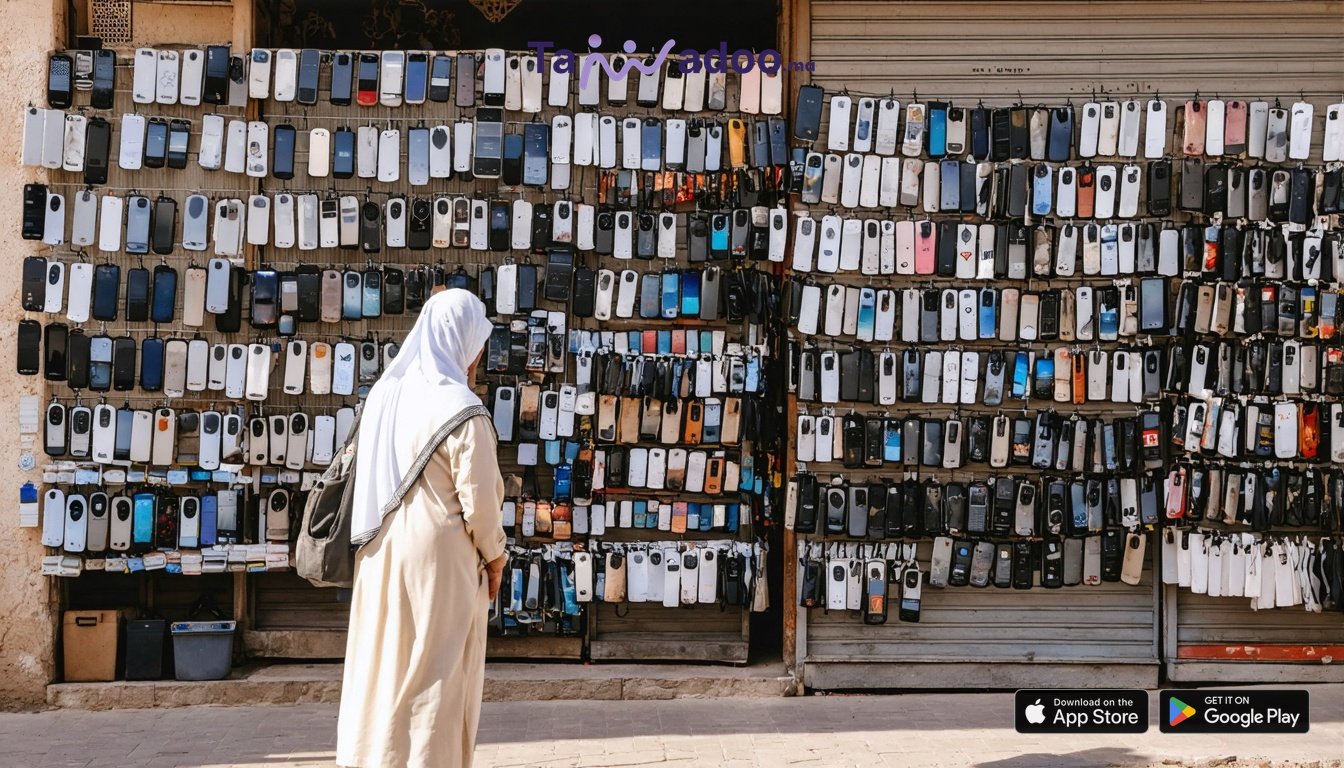
Every major Moroccan city has a dedicated electronics souk or street market. In Casablanca, the Derb Ghallef market is the most well-known. In Rabat, you'll find clusters of phone vendors near the medina. Marrakech and Tangier have similar hubs. These markets offer the widest selection and the lowest prices — but also the highest risk of encountering refurbished devices passed off as original, or phones with hidden faults.
If you go this route, bring someone who knows the market, and never skip the verification steps outlined below.
Online Marketplace: Tawadoo
Tawadoo is Morocco's video-first classified marketplace, and it's the most practical starting point for international buyers. You can browse all smartphone listings on Tawadoo from anywhere in the world before you ever leave your accommodation. This lets you shortlist devices, compare prices across cities, and reach out to sellers before committing to a meeting.
One feature that matters particularly for international buyers: video listings. When a seller has recorded a short video of the phone — showing the screen, the camera in action, the body condition — you get a far more honest picture of what you're buying than static photos alone can provide. Prioritise listings that include video when you're searching; it's a strong signal that the seller is confident in what they're offering.
You can also filter Tawadoo smartphone listings by brand to narrow your search quickly. Verified seller profiles and response rate badges help you gauge how active and trustworthy a seller is before you reach out.
Step-by-Step: How to Buy a Phone Safely in Morocco
Step 1 — Browse and Shortlist
Start on Tawadoo's smartphone category. Filter by your target price range and city. Shortlist three to five listings that match your needs. Pay attention to listing quality: clear photos, a detailed description, and especially a video are all positive signals. A listing with a single blurry photo and no description is a red flag regardless of price.
Step 2 — Contact the Seller
Message the seller through the platform. Ask specific questions: How old is the phone? Has it been repaired? Is it dual SIM? Does it come with the original charger and box? What is the battery health percentage? A genuine seller will answer these questions clearly and quickly. Vague or evasive answers are a warning sign.
Check the seller's response rate badge on their profile — sellers who respond consistently are more likely to be serious and trustworthy.
Step 3 — Arrange a Meeting in a Public Place
All transactions on Tawadoo are conducted face-to-face between buyer and seller. This is standard practice in Morocco — you meet, you inspect the item, you pay. Never send money in advance of seeing the phone in person. Arrange to meet in a well-lit, busy public location: a café, a shopping mall, a busy street corner. Avoid meeting at a private residence, especially for your first transaction with a seller you don't know.
If you're buying a high-value device (above 5,000 DH), consider bringing a friend or colleague with you.
Step 4 — Inspect the Device Thoroughly
This is the most critical step. Do not rush it, and do not let the seller rush you. Here is a complete inspection checklist:
- IMEI verification: Dial *#06# to display the IMEI number. Cross-check it against the number printed on the box and on the phone's Settings > About page. All three must match. If they don't, walk away.
- iCloud / Google Account lock: For iPhones, go to Settings and confirm there is no Apple ID signed in, or that the seller signs out in front of you. For Android, go to Settings > Accounts and check for any Google account. A locked device is unusable — this is one of the most common scams in the secondhand phone market globally, including Morocco.
- Battery health: On iPhone, go to Settings > Battery > Battery Health. Anything below 80% means the battery will need replacing soon — factor this into your price negotiation. On Android, battery health apps (AccuBattery, for example) can give you a reading, or ask the seller to show you recent screen-on time stats.
- Screen condition: Check for dead pixels by displaying a solid white image, then solid black. Look for yellowing or burn-in on OLED screens by displaying solid grey.
- Camera test: Open the camera app and test both front and rear cameras. Check for focus issues, sensor dust, and that the flash works.
- Charging port and audio jack: Plug in a charger and confirm it charges. Test the speakers and microphone with a voice note.
- SIM tray: Confirm the SIM tray is functional and matches the phone's stated SIM configuration (single or dual SIM).
- Network unlock status: If you plan to use a Moroccan SIM (Maroc Telecom, Inwi, or Orange Maroc), confirm the phone is either unlocked or compatible with the network you intend to use. Ask the seller to insert a SIM and confirm it connects.
Step 5 — Negotiate and Pay
Negotiation is completely normal and expected in the Moroccan secondhand market. If you've found a genuine fault — battery health below 80%, a small screen scratch, missing charger — use these as legitimate grounds to negotiate down. A polite, reasonable counter-offer is standard practice; aggressive bargaining is not necessary and can sour the interaction.
Pay in cash. Count the notes in front of the seller before handing them over, and ask the seller to confirm receipt. There is no digital payment or escrow mechanism for private transactions — cash is the norm.
Red Flags to Watch Out For
The Moroccan secondhand phone market is generally straightforward, but as with any secondhand market anywhere in the world, certain warning signs deserve your attention:
- A price that is dramatically below market rate for no clear reason
- A seller who refuses to meet in person and insists on shipping the phone before payment
- IMEI numbers that don't match across box, device, and settings
- A phone that is still signed into someone else's Apple ID or Google account
- A seller who pressures you to decide immediately without giving you time to inspect
- Listings with no photos, no description, and no video — especially at unusually low prices
If something feels off, trust your instincts and walk away. There are always more listings on Tawadoo's marketplace.
Getting a Moroccan SIM Card for Your New Phone
Once you have your phone, you'll want a local SIM. Morocco has three main operators: Maroc Telecom (IAM), Inwi, and Orange Maroc. All three have retail outlets in every major city and offer prepaid SIM cards for as little as 10–20 DH. You'll need your passport or residency card (CIN for residents) to register. Prepaid data plans are very affordable — 5–10 GB monthly packages typically cost 30–60 DH, making Morocco one of the more affordable mobile data markets in the region.
Buying a Phone for Someone Else in Morocco
If you're an expat buying a phone for a Moroccan family member, or helping a colleague source a device, the same process applies. One practical tip: use Tawadoo to browse listings together remotely before your visit. The platform works from any device and in any location — so you can shortlist options with the person you're buying for before you even arrive at the meeting point. This saves significant time and reduces the chance of impulse decisions under seller pressure.
FAQ: Buying Used Phones in Morocco
What is a fair price for a used iPhone 13 in Morocco in 2026?
A used iPhone 13 in good condition with 128GB storage typically costs between 7,000 and 9,000 DH on the Moroccan secondhand market as of July 2026. The 256GB variant commands a premium of roughly 800–1,200 DH more. Prices are slightly higher in Casablanca and Rabat compared to smaller cities. Always verify battery health is above 80% before agreeing to the listed price — a degraded battery justifies a 500–1,000 DH reduction.
Is it safe to buy a used phone on Tawadoo?
Tawadoo provides tools that help you make an informed decision: verified seller profiles, response rate badges, and video listings that show the phone's real condition before you commit to a meeting. The platform also allows you to report sellers and can ban users who engage in fraudulent behaviour. That said, the safest approach is always to inspect the device in person before paying, meet in a public place, and verify the IMEI and account lock status yourself. No marketplace can substitute for your own due diligence on the day.
How do I check if a phone is stolen or blacklisted in Morocco?
Morocco's ANRT (Agence Nationale de Réglementation des Télécommunications) maintains an IMEI database. You can dial *#06# on the device to retrieve the IMEI, then cross-check it against the box and settings. If the numbers don't match, the device may have been tampered with. For additional verification, you can contact your intended network operator (Maroc Telecom, Inwi, or Orange Maroc) and ask them to check whether the IMEI is active and unblocked on their network before completing the purchase.
What documents should a seller provide when selling a phone in Morocco?
For a private secondhand sale, there are no legally required documents — but a responsible seller should be able to show you the original purchase receipt or invoice, the original box with matching IMEI, and any warranty cards if the phone is still under manufacturer warranty. If the seller cannot produce any of these and the phone is a high-value model, treat this as a risk factor and negotiate accordingly or walk away.
Can I find unlocked, dual-SIM phones in Morocco?
Yes — dual-SIM smartphones are extremely common in Morocco, far more so than in Western European markets. Most mid-range and budget Android phones sold in Morocco are dual-SIM by default, as many Moroccan users maintain separate personal and professional SIMs. iPhones sold in Morocco through official channels are typically dual-SIM (nano SIM + eSIM on newer models). When browsing listings on Tawadoo, the listing description usually specifies SIM configuration — if it doesn't, ask the seller directly before arranging a meeting.
Ready to start your search? Browse all current smartphone listings on Tawadoo and filter by city, price, and condition to find the right device for your needs today.